©이훈구
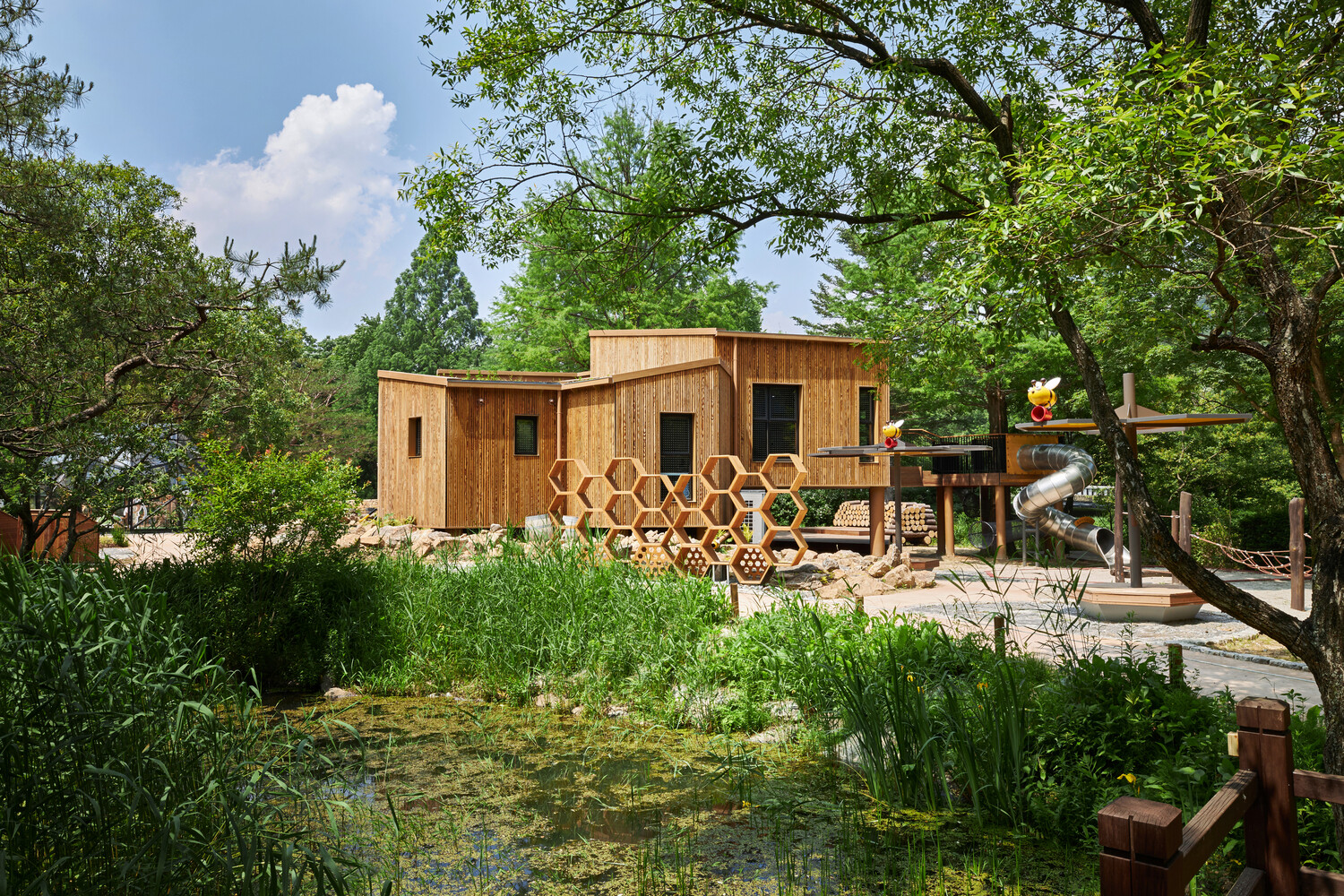
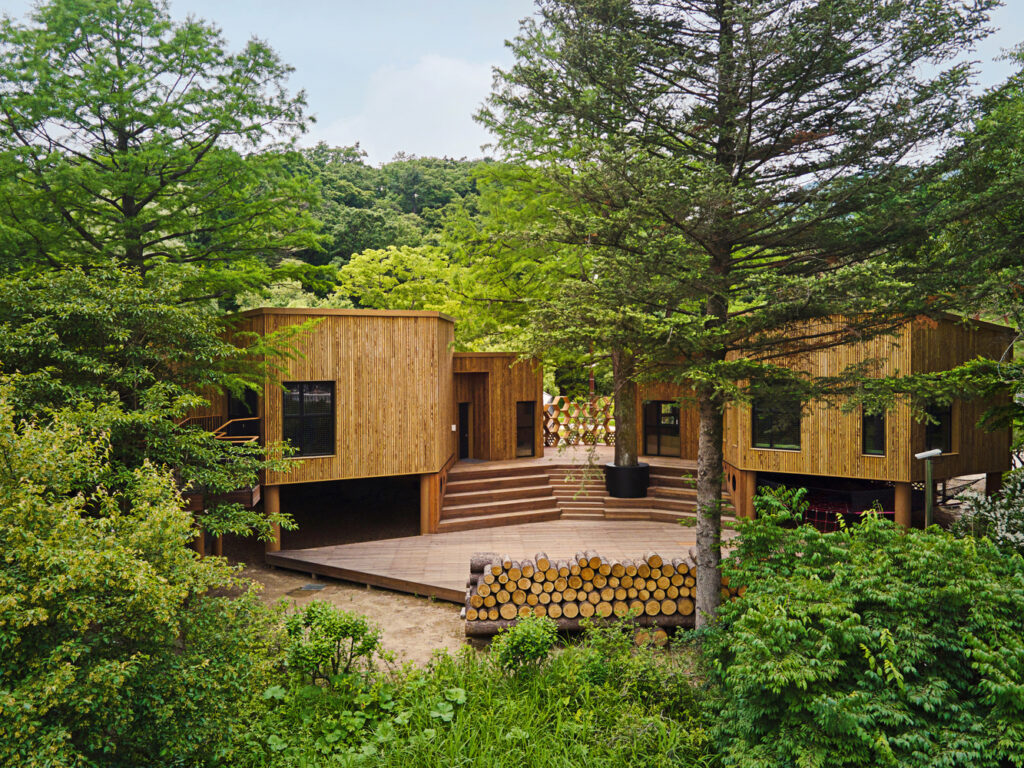
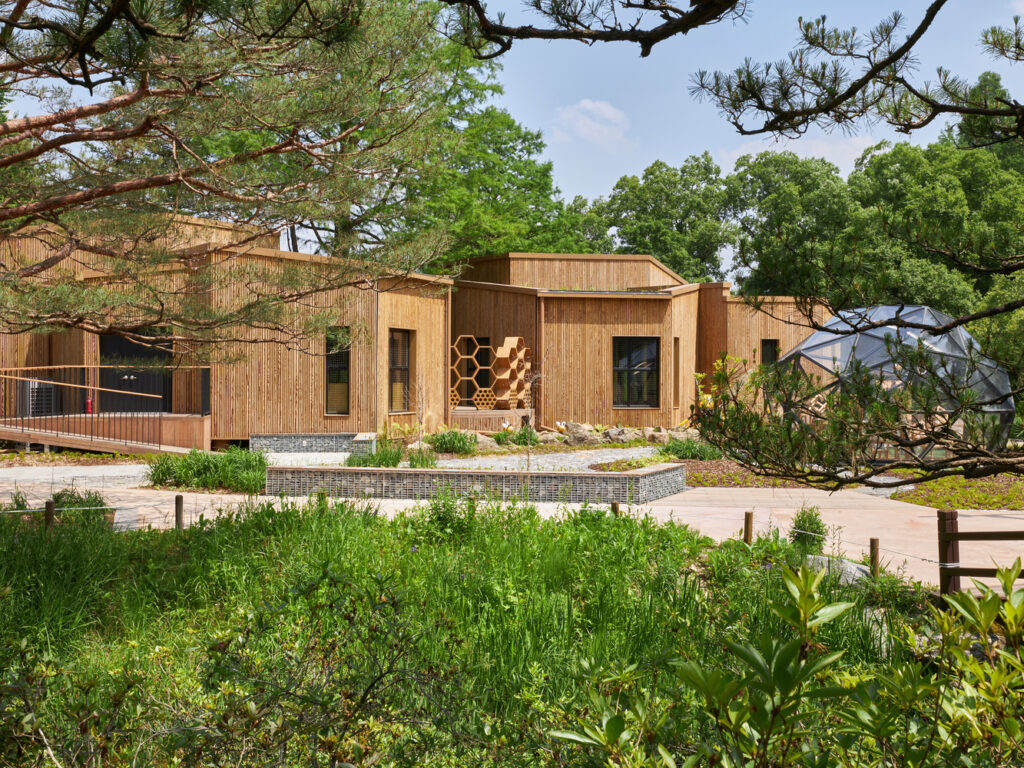
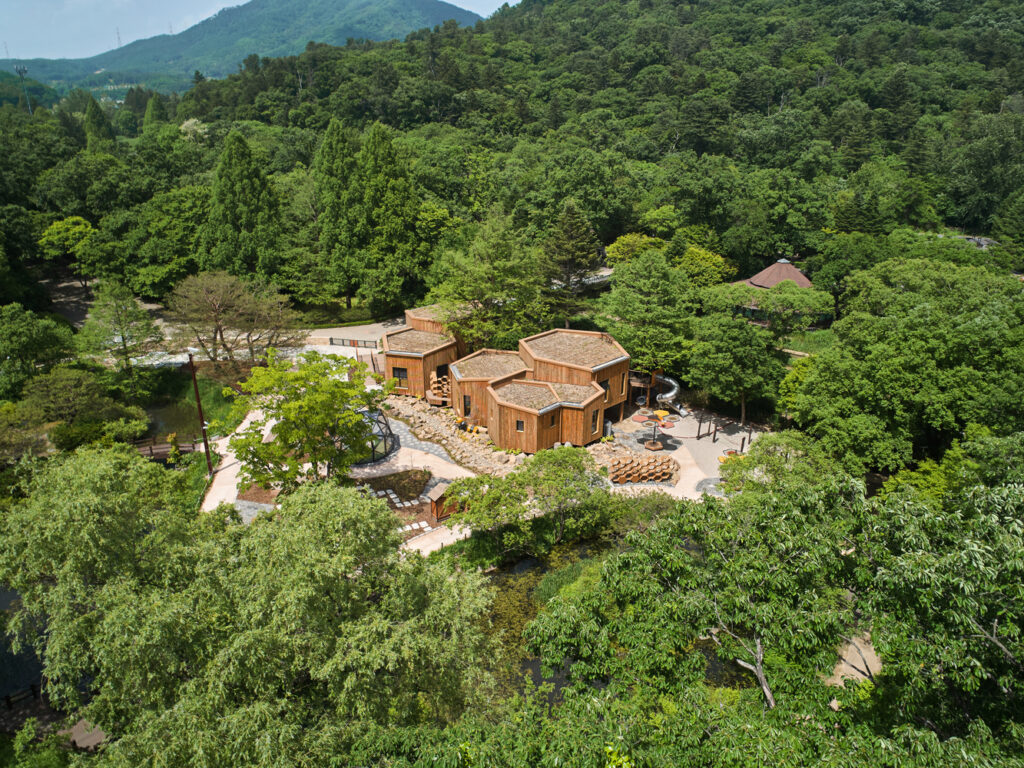
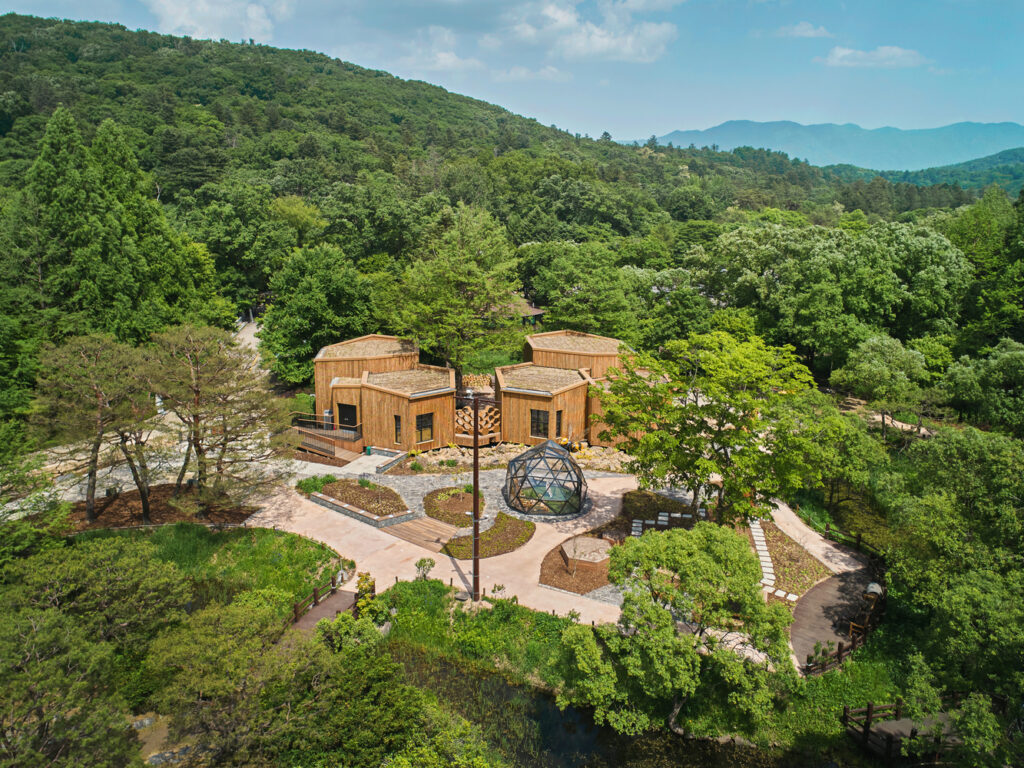
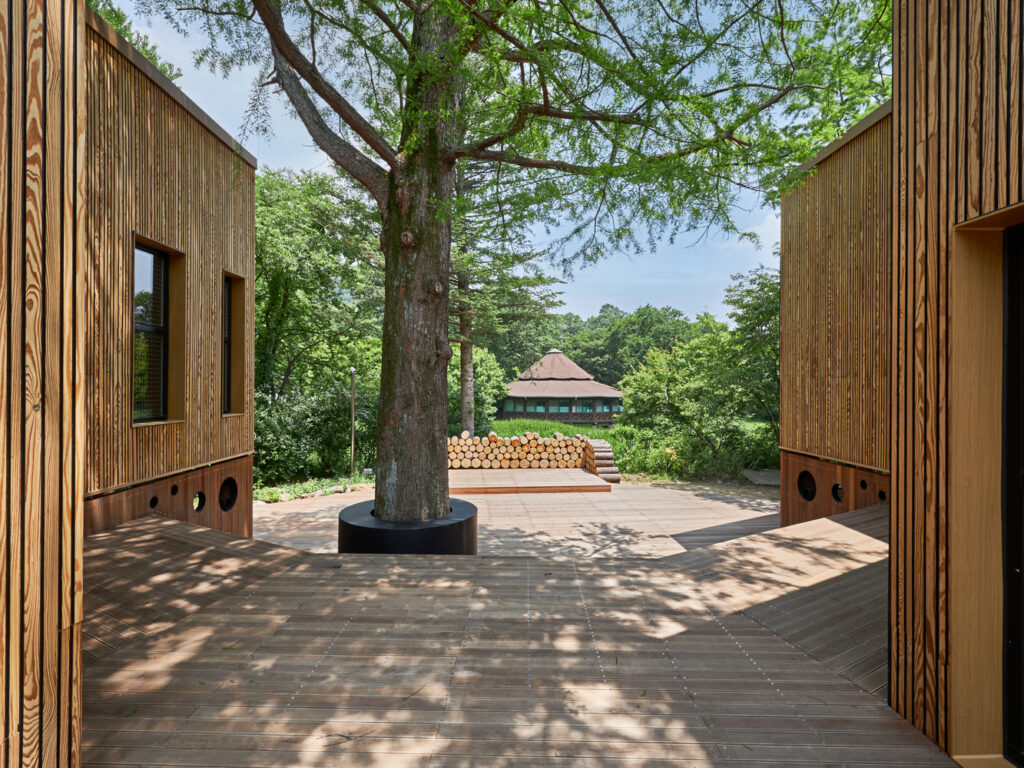
‘국립수목원 어린이숲학교’는 건물과 야외 공간 전시를 통해 어린이들에게 숲과 환경의 중요성을 재미있고 쉽게 알려주는 교육 및 전시 공간입니다. 건축 개념은 자연, 생태계, 건축이 공존하는 생태친화적 디자인에 기반합니다. 이 프로젝트의 첫 번째 출발점은 건물과 기존 수목의 조화입니다. 오래된 전나무와 편백나무를 보존하고 그 주변으로 건물을 배치했습니다. 따라서 건물은 기존 수목에 둘러싸여 있으며, 동쪽으로는 개울이 흐르고 있어 아름다운 자연 경관을 감상할 수 있도록 설계되었습니다.
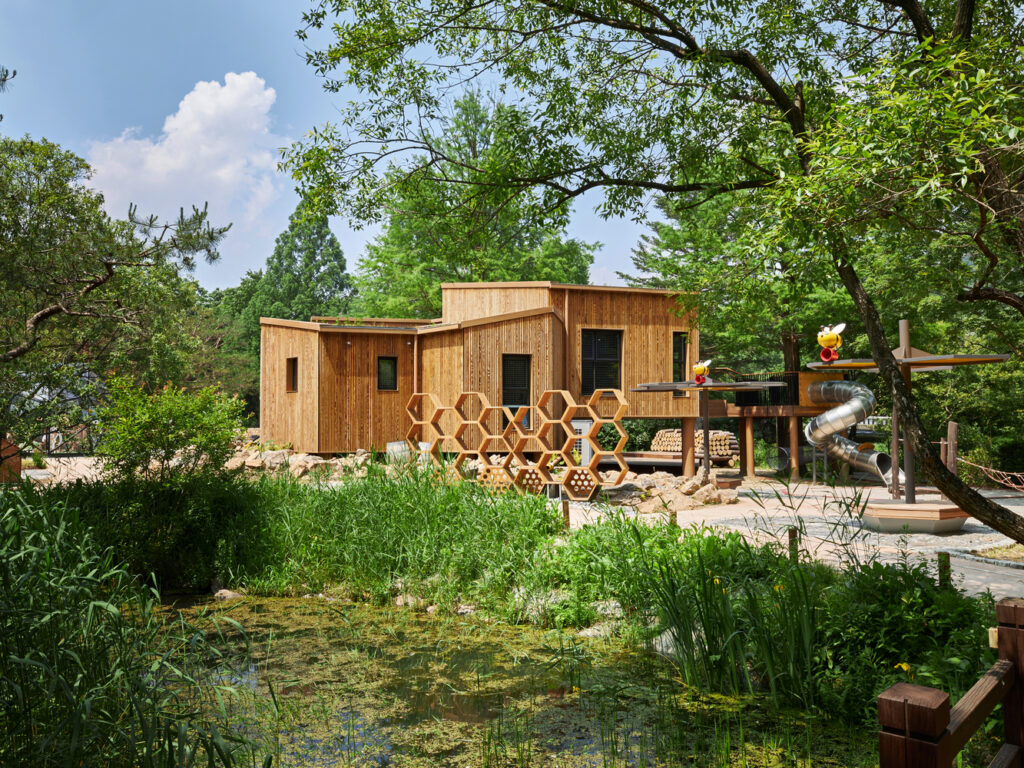
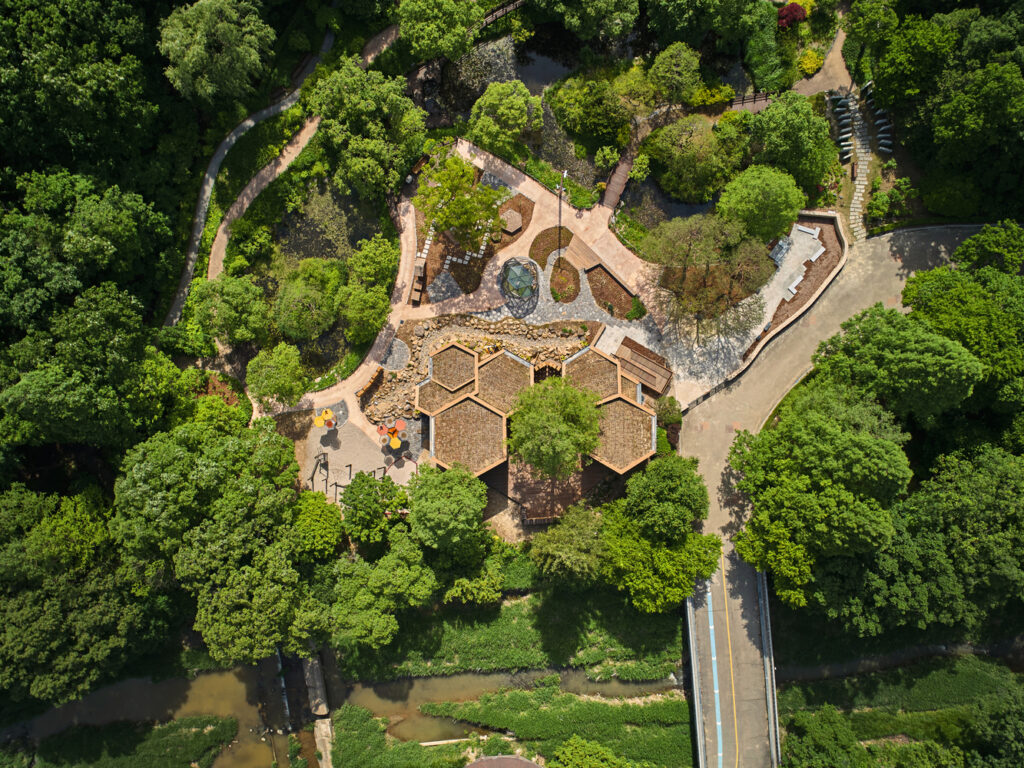
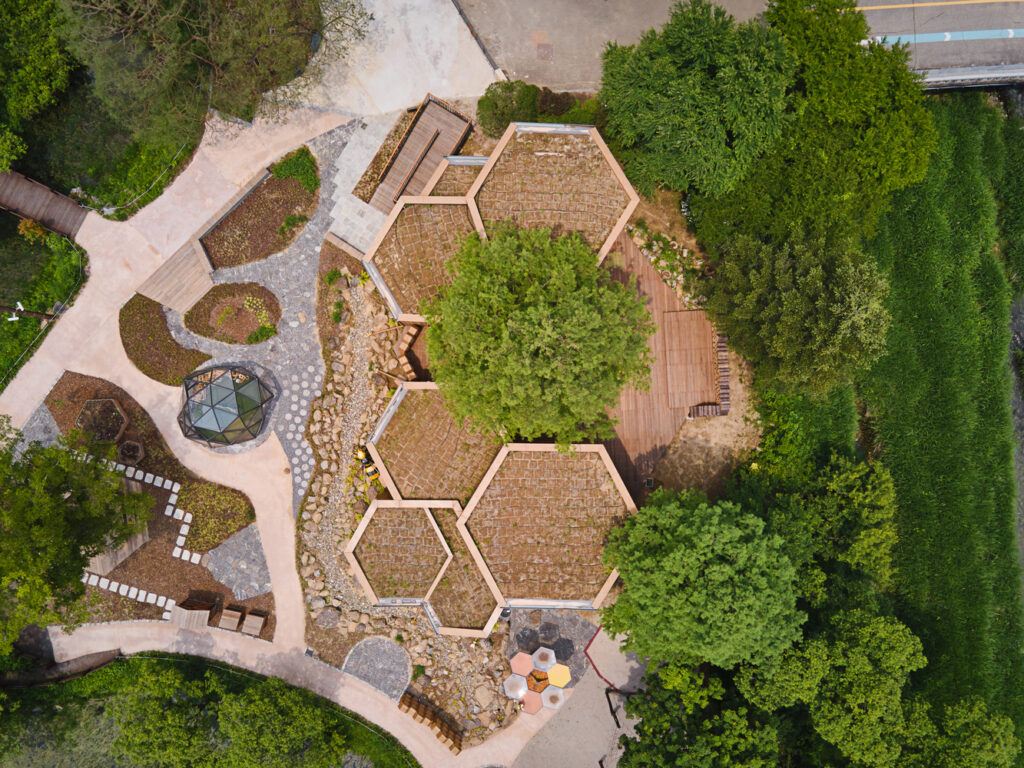
앞서 언급한 기존 나무들과의 조화 외에도, 건축 설계의 핵심 개념은 벌집형 모듈을 통한 공간 구성입니다. 기후 변화에 특히 취약한 곤충인 꿀벌은 생태계에서 매우 중요한 역할을 합니다. 꿀벌이 사라지면 식물은 열매를 맺지 못해 멸종하고, 지구의 산소 공급과 식량 공급에도 악영향을 미칩니다. 생태계에서 꿀벌의 중요성을 알리고, 다양한 생물종의 공존과 생물 다양성의 중요성을 어린이들에게 교육하기 위해, 우리는 벌집형 구조를 ‘생태친화적 건축 설계’의 핵심 요소로 선택했습니다. 육각형 벌집 구조는 생태계에서 중요한 촉매 역할을 하는 꿀벌을 상징하는 동시에, 다양한 육각형 모듈을 통해 어린이들의 ‘생태적 상상력’을 키워줍니다.
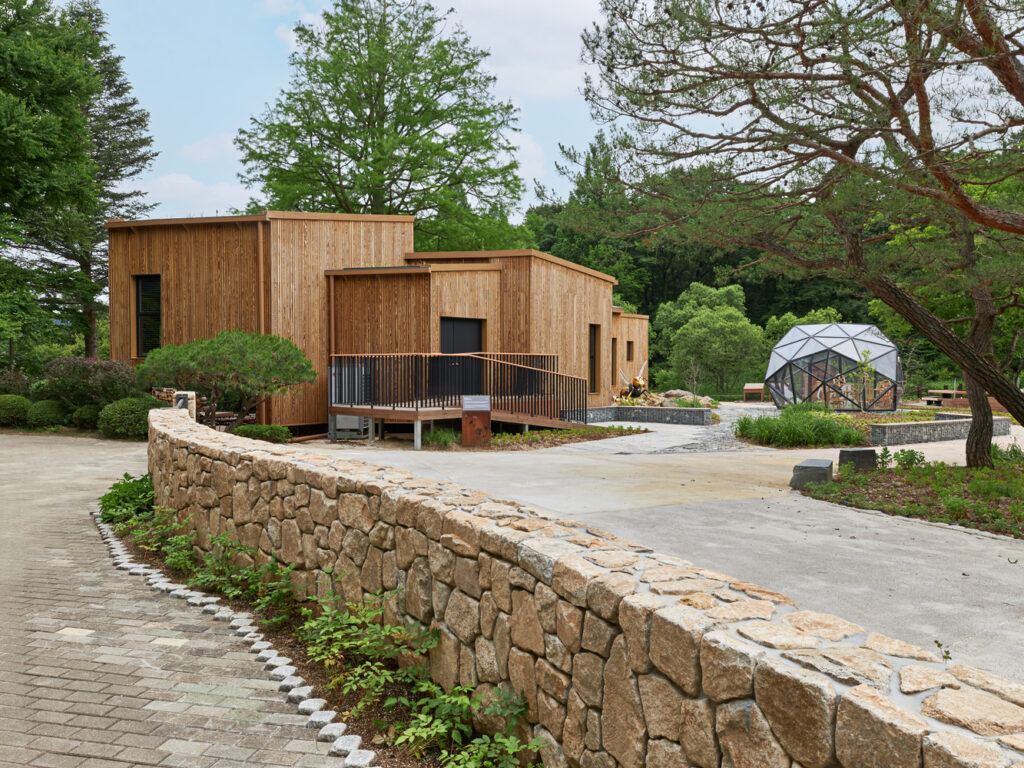
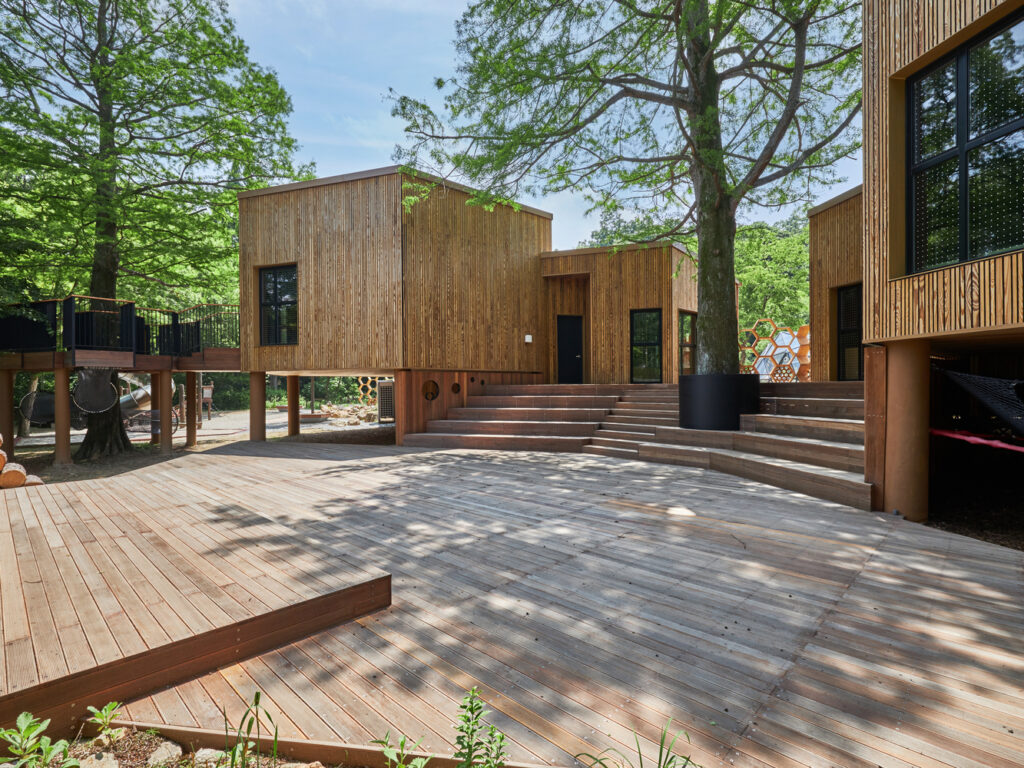
숲 속의 트리하우스라는 건물의 특성을 고려하여, 외관 마감은 주변 나무들과 조화를 이루는 친환경적인 열처리 목재 채널 사이딩을 사용했습니다. 또한 창틀, 지붕 홈, 빗물받이에는 포스코씨앤씨의 목재 무늬 고해상도 프린팅 강판(PosART)을 적용하여 열처리 목재 채널 사이딩과 어울리는 분위기를 연출하고, 수목원과 조화로운 경관을 완성했습니다. 내부에도 이 목재 무늬 프린팅 강판을 사용하여 ‘나무, 잎, 나이테, 숲’ 등 숲과 생태를 주제로 다양한 디자인을 표현했습니다.
야외 공간은 다양한 테마로 꾸며질 예정입니다.
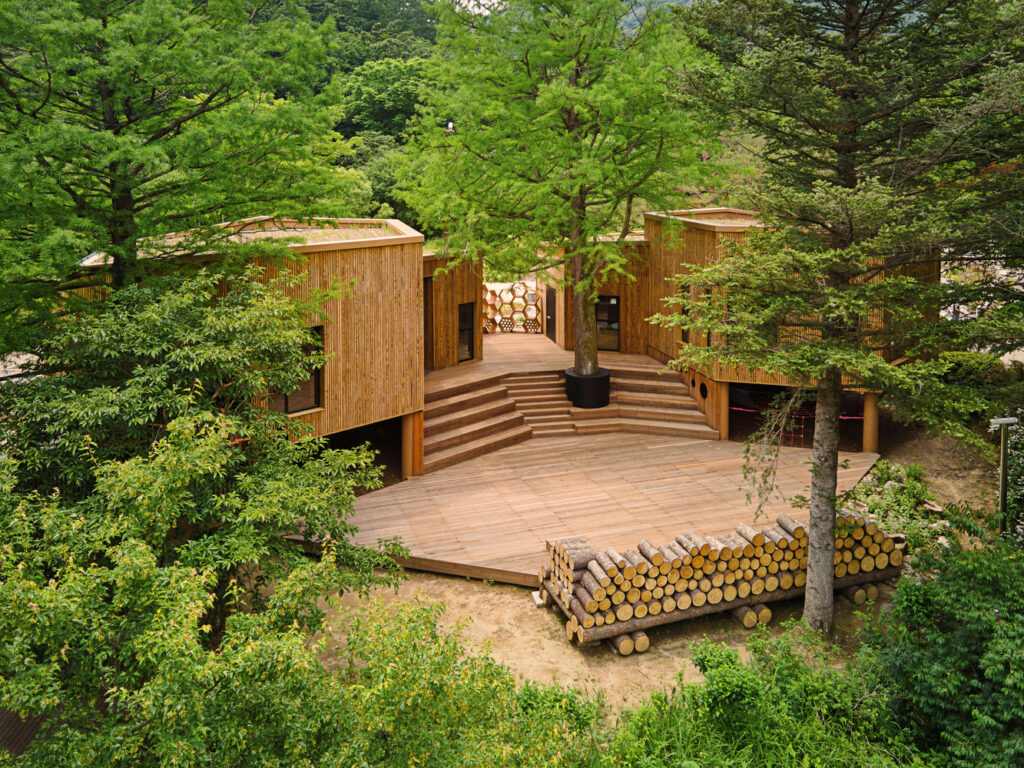
– 야외 무대: 기존 나무들을 중심으로 벌집 모양으로 배치된 공간이 야외 테라스 무대로 활용됩니다. 방문객들은 이곳에 앉아 야외 공연을 관람할 수 있으며, 자연과 하나 되는 교실의 역할을 합니다.
– 빗물 정원: 지붕 경사면을 통해 빗물을 모으고 재활용하는 개념을 담은 공간으로, 벌집 모양의 홈통과 같은 교육적인 요소를 통해 아이들이 즐겁게 놀 수 있도록 설계되었습니다.
– 텃밭: 식물을 직접 재배함으로써 다양한 감각을 자극하고 일깨우는 체험 공간.
또한, 다양한 식물로 구성된 옥상 정원과 곤충의 서식지와 생활사를 관찰할 수 있는 수분 정원도 마련되어 있습니다.
“Korea National Arboretum Children’s Forest School” is used as an educational and exhibition space to inform children about the importance of forests and the environment in a fun and easy way through the building and the exhibition of outdoor spaces. The architectural concept is based on the biophilic design in which nature, ecosystem and architecture coexist. The first starting point of this project is the harmony between the building and the existing trees. We preserve the old fir and cypress trees and arrange the building around these trees. Thus, the building is surrounded by the existing trees, and the layout opens to the stream on the east side of the site where we can see the beautiful scenery naturally.
In addition to harmonizing with the existing trees mentioned above, the main design concept of architecture is the composition of space through honeycomb modules. The significance of the bee, as an insect particularly vulnerable to climate change, in the ecosystem is special. When the bees disappear, plants become extinct because they do not bear fruit, and it also affects the planet’s oxygen supply and food supply. In order to convey the message of the importance that bees in the ecosystem, and to inform children about the importance of the coexistence of various living species and biodiversity, we choose the honeycomb-type as “Biophilic Architecture Design”. The hexagonal honeycomb structure symbolizes bees that play an important catalyst role in the ecosystem, while at the same time nurturing children’s “ecological imagination” through various hexagonal modules.
Considering that the building is a treehouse in the forest, and the exterior finish is an eco-friendly thermowood channel siding to create an elevation that matches the surrounding trees. And the window frames, roof scoops and water gutter create an exterior atmosphere that matches the thermowood channel siding through Posco C&C’s wood-patterned high-resolution printed steel plate (PosART), creating a harmonious landscape with the arboretum. Also, this printer wood-patterned steel plate is used inside and it represents the various themes of forest and ecology such as “trees, leaves, tree rings, and forest”.
The outdoor space will have different themes.
– Outdoor stage: A space composed of a honeycomb arrangement centering on existing trees becomes an outdoor terrace stage space. Here, visitors can sit and watch performances outdoors, and it becomes a classroom open to nature.
– Rain Garden: A space of the concept of recycling and receiving rainwater through the slope of the roof allows children to have enough fun elements such as the educational aspect of recycling resources, honeycomb gutter.
– Kitchen Garden: An experienced space that stimulates and awakens various senses by cultivating plants directly.
In addition, there is a roof garden composed of various planting materials and a pollinate garden where we can observe and see the habitat and life of insects.
원문 기사 보기 https://www.archdaily.com/965761/korea-national-arboretum-childrens-forest-school-geeumplus